
I reimagined my Healthy Tuna Salad by replacing mayonnaise with Greek yogurt to lower calories and fat, and I share the simple ingredient tricks that make the swap work every time.
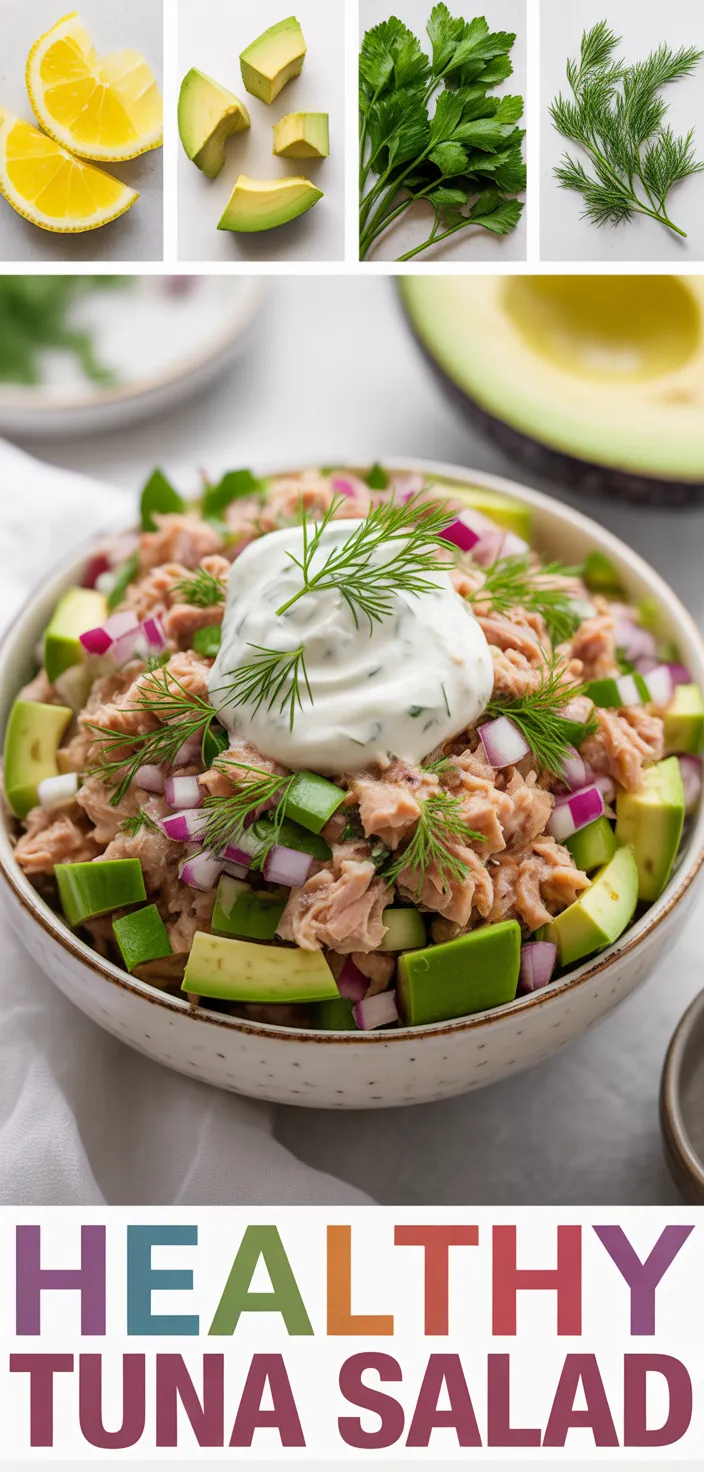
I never thought a lighter tuna mash could make me actually look forward to lunches, but this Healthy Tuna Salad flipped that idea. I use tuna in water and plain nonfat greek yogurt to keep it bright and less heavy, yet it still delivers that punch of savory, slightly tangy comfort.
It’s the kind of dish that sneaks into your week, makes sandwiches and bowls feel smarter, and you find yourself wondering why you waited so long to try it. Tiny textural surprises make you do a double take, then you scoop another bite and forget about the rest of your plans.
Ingredients
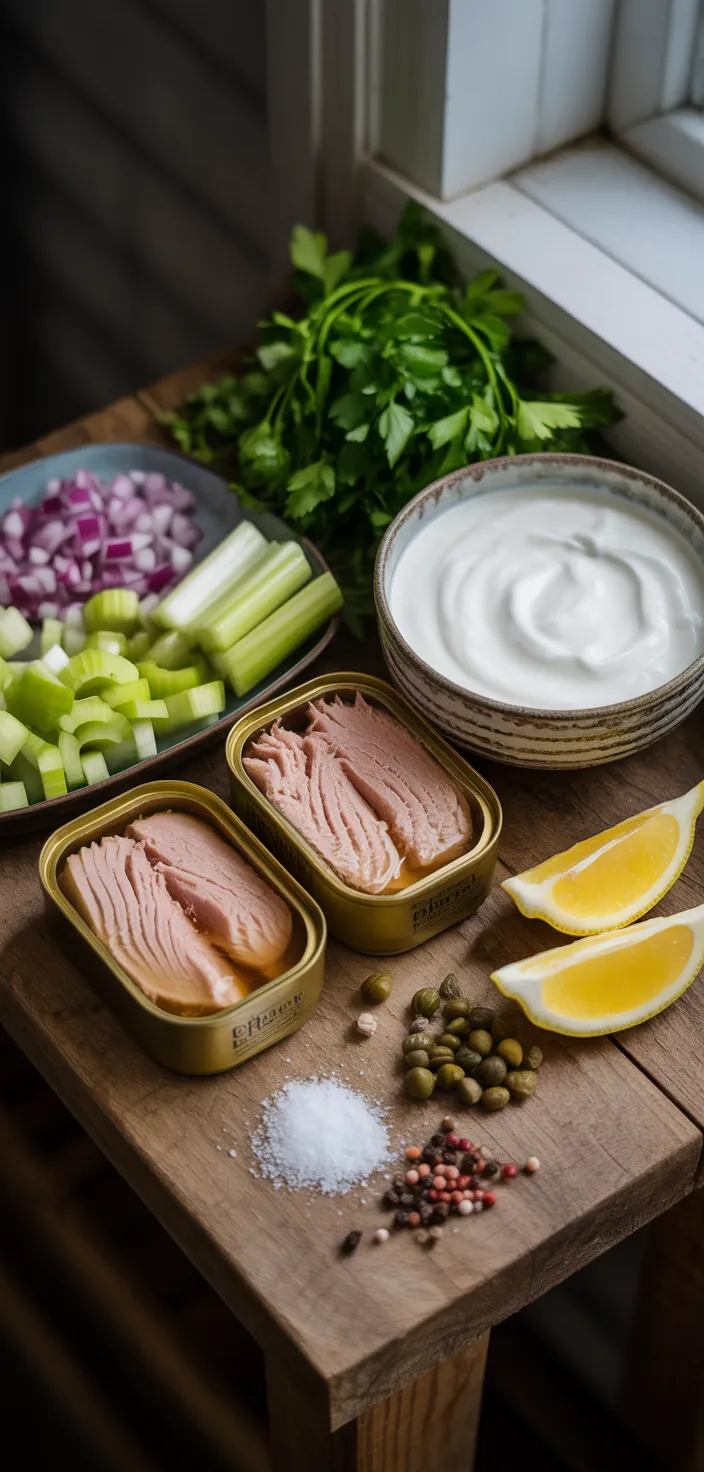
- Tuna: packed with lean protein, low fat, keeps you full for hours
- Greek yogurt: creamy swap for mayo, adds protein and tang, less fat
- Celery: crunchy fiber and water, gives texture and light freshness
- Red onion or scallions: sharp bite, adds flavor and a little sweetness sometimes
- Lemon juice: bright acidic zip, cuts richness and makes it taste fresher
- Dijon mustard: small punch of savory heat, helps bind and adds depth
- Parsley or dill: fresh herbs brighten flavor, add vitamins and color
- Capers: little salty pops, boost savory notes, use sparingly tho
Ingredient Quantities
- 2 (5 oz) cans tuna in water, drained
- 1/2 cup plain nonfat greek yogurt
- 1 large celery stalk, finely chopped (about 1/2 cup)
- 2 tablespoons red onion, finely chopped or 2 scallions, thinly sliced
- 1 tablespoon fresh lemon juice (about 1/2 lemon)
- 1 teaspoon Dijon mustard
- 2 tablespoons chopped fresh parsley or dill
- 1 tablespoon capers, drained (optional)
- Salt 1/4 teaspoon, or to taste
- Freshly ground black pepper 1/4 teaspoon, or to taste
How to Make this
1. Drain both cans of tuna well, then flake the tuna into a medium bowl with a fork, breaking it up but leaving a few chunky bits for texture; dont overwork it or it gets mushy.
2. Add the 1/2 cup plain nonfat greek yogurt, 1 tablespoon fresh lemon juice and 1 teaspoon Dijon mustard to the tuna and stir until mostly smooth and creamy.
3. Fold in the finely chopped celery (about 1/2 cup) and the 2 tablespoons red onion or sliced scallions, combine gently so the veggies stay crisp.
4. Stir in 2 tablespoons chopped fresh parsley or dill and 1 tablespoon drained capers if using; if the capers seem salty rinse them briefly before adding.
5. Season with 1/4 teaspoon salt and 1/4 teaspoon freshly ground black pepper, then taste; capers add salt so you might want less than the recipe calls for.
6. Adjust flavors: add a splash more lemon if it needs brightness, a touch more mustard for tang, or a little extra yogurt if it seems too thick.
7. Cover and chill at least 15 minutes so the flavors marry; it actually tastes better after resting, but you can eat right away if you must.
8. Serve on whole grain toast, in lettuce cups, over a salad or with crackers. Store leftovers in an airtight container in the fridge for up to 3 days.
Equipment Needed
1. Can opener, unless your cans have pull tabs
2. Small strainer or colander to drain the tuna (or a plate and paper towel)
3. Medium mixing bowl for flaking and combining
4. Fork to break up the tuna and stir
5. Measuring cups and spoons for the yogurt, lemon and mustard
6. Cutting board for chopping the celery and onion
7. Chef knife or paring knife for the chopping
8. Spoon or rubber spatula for folding and scraping, plus an airtight container for leftovers (optional)
FAQ
Healthy Tuna Salad Recipe Substitutions and Variations
- Tuna: swap the canned tuna for canned salmon or canned chicken, same can size works. Want no fish? use about 1 1/2 cups mashed chickpeas mixed the same way, it’s great and keeps the texture.
- Plain nonfat Greek yogurt: you can do a 1:1 swap with light mayo or low fat sour cream, or use 1/2 to 3/4 cup mashed avocado for a creamier, healthier fat option (start with less and add to taste).
- Celery: if you don’t like celery try finely diced cucumber, jicama, or green apple for crunch and a little sweetness, use about 1/2 cup chopped like the recipe.
- Fresh lemon juice: substitute 1 tablespoon apple cider vinegar or white wine vinegar, or use lime juice if you want a different citrus note; vinegar is a tiny bit stronger so taste as you go.
Pro Tips
– Drain and dry the tuna really well, then break it up with a fork so you keep some chunky bits; dont mash it or it turns gloopy and bland.
– Taste the capers before adding salt, they can be super salty so rinse them quick if needed and cut back on the added salt.
– Let the mix rest in the fridge at least 15 minutes, preferably longer; the flavors mellow and blend together way better after sitting.
– If the salad seems dry or gummy, loosen it with a little extra yogurt, a splash of lemon juice or just a teaspoon of olive oil, rather than stirring more which can make it pasty.
– Add texture and brightness when serving: crunchy celery, sliced scallions or a sprinkle of fresh herbs help, and a little lemon zest pops way more than extra juice.
Healthy Tuna Salad Recipe
I reimagined my Healthy Tuna Salad by replacing mayonnaise with Greek yogurt to lower calories and fat, and I share the simple ingredient tricks that make the swap work every time.
2
servings
208
kcal
Equipment: 1. Can opener, unless your cans have pull tabs
2. Small strainer or colander to drain the tuna (or a plate and paper towel)
3. Medium mixing bowl for flaking and combining
4. Fork to break up the tuna and stir
5. Measuring cups and spoons for the yogurt, lemon and mustard
6. Cutting board for chopping the celery and onion
7. Chef knife or paring knife for the chopping
8. Spoon or rubber spatula for folding and scraping, plus an airtight container for leftovers (optional)
Ingredients
-
2 (5 oz) cans tuna in water, drained
-
1/2 cup plain nonfat greek yogurt
-
1 large celery stalk, finely chopped (about 1/2 cup)
-
2 tablespoons red onion, finely chopped or 2 scallions, thinly sliced
-
1 tablespoon fresh lemon juice (about 1/2 lemon)
-
1 teaspoon Dijon mustard
-
2 tablespoons chopped fresh parsley or dill
-
1 tablespoon capers, drained (optional)
-
Salt 1/4 teaspoon, or to taste
-
Freshly ground black pepper 1/4 teaspoon, or to taste
Directions
- Drain both cans of tuna well, then flake the tuna into a medium bowl with a fork, breaking it up but leaving a few chunky bits for texture; dont overwork it or it gets mushy.
- Add the 1/2 cup plain nonfat greek yogurt, 1 tablespoon fresh lemon juice and 1 teaspoon Dijon mustard to the tuna and stir until mostly smooth and creamy.
- Fold in the finely chopped celery (about 1/2 cup) and the 2 tablespoons red onion or sliced scallions, combine gently so the veggies stay crisp.
- Stir in 2 tablespoons chopped fresh parsley or dill and 1 tablespoon drained capers if using; if the capers seem salty rinse them briefly before adding.
- Season with 1/4 teaspoon salt and 1/4 teaspoon freshly ground black pepper, then taste; capers add salt so you might want less than the recipe calls for.
- Adjust flavors: add a splash more lemon if it needs brightness, a touch more mustard for tang, or a little extra yogurt if it seems too thick.
- Cover and chill at least 15 minutes so the flavors marry; it actually tastes better after resting, but you can eat right away if you must.
- Serve on whole grain toast, in lettuce cups, over a salad or with crackers. Store leftovers in an airtight container in the fridge for up to 3 days.
Notes
- Below you’ll find my best estimate of this recipe’s nutrition facts. Treat the numbers as a guide rather than a rule—great food should nourish both body and spirit. Figures are approximate, and the website owner assumes no liability for any inaccuracies in this recipe.
Nutrition Facts
- Serving Size: 254g
- Total number of serves: 2
- Calories: 208kcal
- Fat: 1g
- Saturated Fat: 0.3g
- Trans Fat: 0g
- Polyunsaturated: 0.5g
- Monounsaturated: 0.4g
- Cholesterol: 56mg
- Sodium: 637mg
- Potassium: 637mg
- Carbohydrates: 6g
- Fiber: 1.3g
- Sugar: 3g
- Protein: 42.9g
- Vitamin A: 350IU
- Vitamin C: 6.8mg
- Calcium: 107mg
- Iron: 1.6mg